Marketing
Top Remote Prop Trading Firms for Digital Nomads: Your Guide
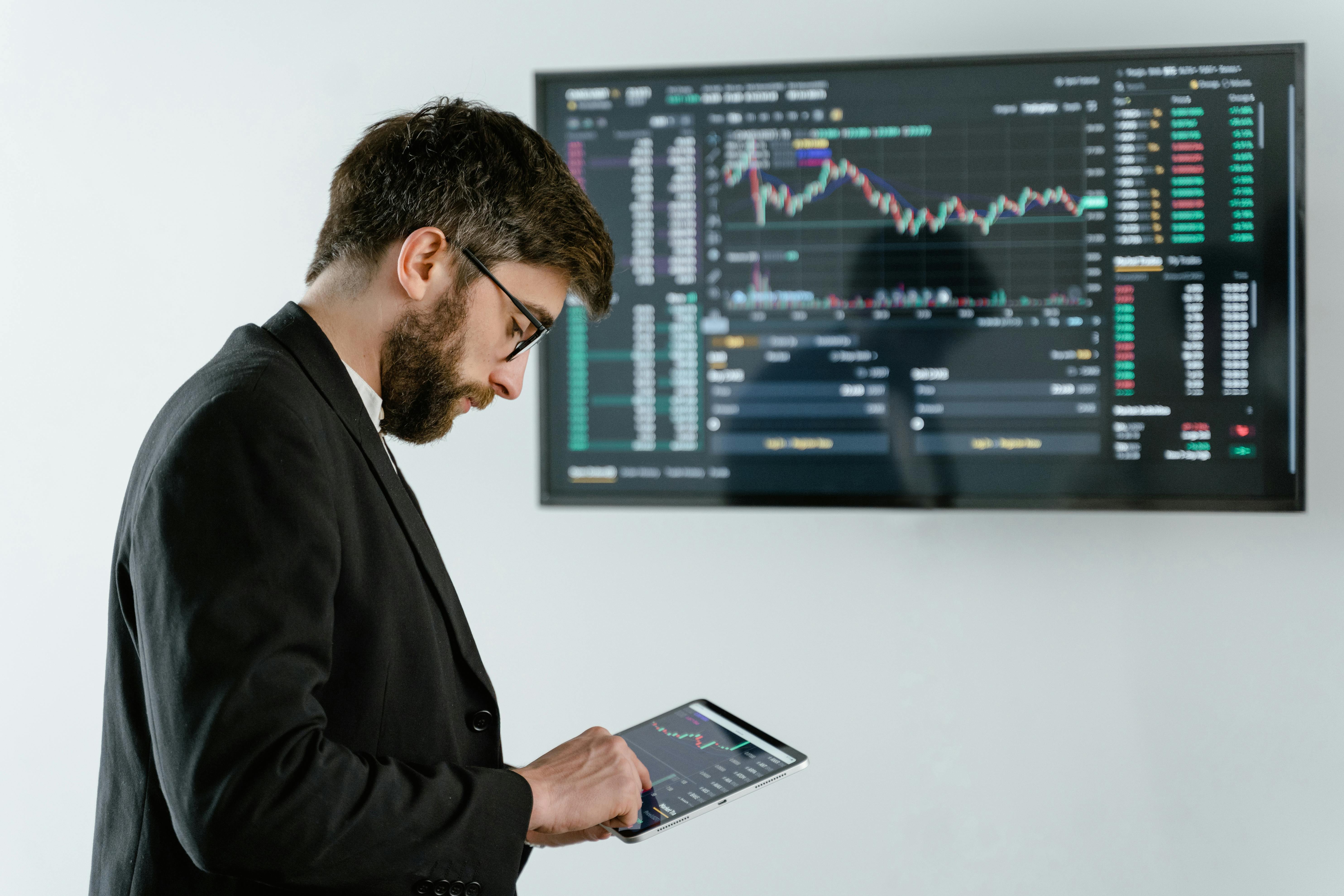
Remote Proprietary Trading Firms for Digital Nomads: A Comprehensive Guide
The intersection of travel and trading is no longer a niche; it’s a burgeoning lifestyle. Remote Proprietary Trading Firms are revolutionizing how traders manage capital from paradise-like settings, whether it’s a beach town in Mexico, a co-working hub in Bali, or a layover in Lisbon. In this guide, we will discuss how to select the right prop trading firm, establish a resilient tech stack, maintain compliance while on the move, and effectively plan for payouts to keep your travel adventures uninterrupted.
Having navigated through airport Wi-Fi failures, midnight market openings, and the headaches of KYC refreshes at inopportune times, I can assure you that the right preparation, and the right prop firm, turns these hurdles into minor inconveniences. Let’s kickstart your remote trading journey, smartly.
Understanding Proprietary Trading Firms
What is a Proprietary Trading Firm?
A proprietary trading firm (prop firm) funds traders to operate with the firm's capital. Typically, traders must pass an evaluation, often referred to as a challenge, which demonstrates their risk management skills and trading edge. In return, traders retain a share of the profits while the firm covers losses up to specific limits. For foundational knowledge on prop trading, consult resources provided by the U.S. Securities and Exchange Commission (SEC).
Understanding the backend of this industry is helpful; for instance, many new firms are built using a White Label Prop Firm model, which allows them to launch quickly with established technology.
This model contrasts with traditional retail trading, where individuals risk their own assets. Prop firms emphasize risk management frameworks, daily loss limits, maximum drawdown, and performance consistency, over the size of a trader's personal account balance. Many firms also offer tools, education, and capital scaling.
Benefits of Joining a Prop Firm as a Digital Nomad
Access to Capital: Rather than saving to amass a six-figure account, you could manage an allocation ranging from $50K to $400K after passing your challenge, with potential scaling opportunities into seven figures.
Flexibility in Trading: Trade your strategy, be it swing, day, or algorithmic, while adhering to established guidelines. Many forex and CFD firms support Expert Advisors (EAs) and discretionary strategies, while futures firms typically align with exchange hours and regulations.
Support and Resources: Numerous firms provide dashboards, risk analytics, education modules, and sometimes coaching or performance feedback, crucial for traveling traders requiring structured support.
Key Considerations for Digital Nomads
KYC and Address Requirements
KYC (Know Your Customer) is critical. Firms must verify your identity and often your residential address. Expect to submit documentation such as:
Government-issued ID (passport is generally easiest for travelers)
Proof of address (bank statement or utility bill, usually dated within the last 90 days)
Sometimes a selfie or liveness check
For those constantly on the move, maintaining a base of documentation is essential. I advise keeping:
A primary residential address that can be documented (like a family home or long-term rental)
Cloud copies of your ID and proof of address, along with previous utility bills
Alerts for passport and driver’s license expirations
Pro Tip: Some firms do not accept virtual mailboxes or “care of” addresses. If utilizing mail scanning services, consult the firm’s KYC policy beforehand. The Importance of Compliance in Prop Firm Growth cannot be overstated, as firms must adhere to strict regulations regardless of where their traders are located.
VPN and IP Address Policies
Most reputable firms recognize the necessity of VPNs and VPSs for traders. However, challenges arise from fraud prevention measures, sudden IP changes or logins from restricted locations can flag your account. Personal security while trading can also be bolstered by understanding privacy legislation as outlined by the Federal Trade Commission (FTC).
As of my last industry review, firms that generally allow VPN/VPS usage include:
FTMO (Forex/CFDs): Permits VPN/VPS usage; consistency is crucial to avoid restricted logins.
The5ers (Forex/CFDs): Generally accepts VPN/VPS; disclosure is advisable.
FundedNext, E8 Funding, City Traders Imperium, SurgeTrader (Forex/CFDs): Historically accepting of VPN/VPS; confirm current policies.
Topstep, Apex Trader Funding, Leeloo, Earn2Trade (Futures): Commonly permit VPN/VPS, especially for Rithmic or CQG connections.
Best Practices:
Maintain consistent IPs by using a single VPN endpoint or preferably a VPS. Repeatedly changing IPs is a quick route to getting flagged.
Notify support in advance if changing regions. A brief ticket explaining travel dates can avert automated security holds.
Avoid logging in from sanctioned countries, even through a VPN, as many firms employ geofencing measures and device fingerprinting.
Time Zone Management
Trading across time zones can be both advantageous and challenging. For instance, if you are a London session trader, being in Europe or Africa minimizes complications. Conversely, if you engage with the New York open, certain parts of the Americas are optimal.
While firms set rules according to market hours, look for:
24/5 support (or close to it) for assistance regardless of your location.
No restrictions on holding trades outside of standard trading hours (especially for swing traders).
Access to cryptocurrencies if you prefer continuous market engagement.
During my three-month stay in Mexico City, I coordinated my schedule around the New York session: sleeping at 11 p.m., hitting the gym at 6 a.m., and prepping for trades by 7 a.m. This routine would not be as feasible in Southeast Asia, where the NY open occurs late at night.
Best Remote Proprietary Trading Firms
Here is a practical and travel-friendly shortlist of prop trading firms that cater to digital nomads. Be sure to verify their current rules and terms, as these may change frequently.
Shortlist by Trading Instrument
Forex/CFD Firms
FTMO: Known for two-step challenges, robust dashboards, and broad instrument options; supports EAs and VPS.
The5ers: Offers funded programs and “bootcamps,” emphasizing risk management and scaling.
E8 Funding, FundedNext, City Traders Imperium, SurgeTrader: A mix of challenge and instant funding styles; verify rules concerning news trading and weekend holds.
Futures Firms
Topstep: Renowned for clear rules and prompt payouts; utilizes platforms like NinjaTrader and T4.
Apex Trader Funding: Known for aggressive promotions and trailing drawdowns; often uses Rithmic connectivity.
Earn2Trade (Gauntlet Mini), Leeloo Trading, Elite Trader Funding: Offers various account sizes and differing drawdown rules.
Crypto-Accessible Firms
Many forex and CFD firms provide crypto trading (like BTCUSD and ETHUSD) via MT4/MT5/cTrader, with some being accessible 24/5 or with extended hours; check for weekend rules and spreads.
Dedicated crypto-only prop firms are rarer; typically, you'd trade crypto CFDs within a standard forex/CFD setting rather than a crypto-specific environment.
Comparison Matrix
When assessing firms, consider the following criteria, which should encompass a typical range based on offerings through 2024. Always confirm specifics before finalizing your choice.
Funding Model: Evaluate if the funding comes from a challenge (often 8-10% profit targets) or instant funding, which may require higher fees.
Profit Split: Typical splits range from 80-90% for Forex/CFDs (with some scaling to 95%) and similar terms for futures.
Drawdown Type: Consider static versus trailing drawdowns; futures often use trailing methods. Also, differentiate between intraday and end-of-day counts for drawdowns.
Allowed Strategies: Clarify if EAs and news trading are permitted; overnight and weekend holds are often subject to stricter verification, especially for swing traders.
Payout Methods: Examine the range of payment choices (bank transfer, Wise, Revolut, Payoneer, crypto) and their associated fees.
Payout Timing and Thresholds: Understand the intervals for initial and subsequent payouts and the minimum thresholds for payout requests.
Setting Up Your Remote Trading Environment
Tech Setup Essentials
Your trading infrastructure should be both portable and robust. I utilize a lightweight laptop, a foldable 15.6" portable monitor for charts, and a compact mechanical keyboard for precision work. However, a reliable VPS is paramount.
VPS Recommendations:
For Forex/Crypto (CFDs): Select a VPS positioned near your prop's liquidity hub, such as London (LD4/LD5) or New Jersey (NY4/NY5). Providers like Beeks, CNS, UltraFXVPS, and low-latency solutions from OVH/Hetzner/Vultr are reliable.
For Futures: Consider latency to exchange gateways (like Chicago for CME via Rithmic/CQG). Utilizing a Chicago-based VPS is crucial for trading contracts like ES, NQ, or CL.
Latency Targets:
Under 10 ms is excellent for scalping.
Under 30 ms is acceptable for discretionary swing or day trading.
Anything above 50 ms may lead to noticeable slippage during economic announcements.
Install your trading platform (MT4/MT5/cTrader/NinjaTrader) on the VPS, access it through remote desktop, and utilize your on-the-go laptop merely as a control interface. This setup ensures that even if the hotel Wi-Fi falters momentarily, your VPS keeps executing your trades.
Reliable Internet Solutions
Internet reliability is your lifeline as a digital nomad. Build multiple layers of connectivity:
Primary: Ensure you have Ethernet or a strong Wi-Fi (5 GHz) connection where you stay. Request a speed test screenshot from your host before booking; aim for at least 50/10 Mbps.
Backup 1: Acquire a local eSIM on your phone with tethering capability (services like Airalo, Nomad or Holafly, or a local carrier can be useful).
Backup 2: Invest in a travel router (e.g., GL.iNet Slate/Mango) for a stable personal network and to dodge the pitfalls of captive portal reconnection failures. Combine this with a portable power bank.
Backup 3: Use a VPS to sustain trading operations, ensuring that orders and EAs remain unaffected during any temporary connection drop.
While hotels can often fall short on internet reliability and Airbnbs can be hit or miss, a co-working space membership is invaluable if trading with significant capital. I routinely run a quick ping test to my VPS and a five-minute packet loss check before any major trading session.
Trading Platforms
MT4/MT5:
Pros: Extensive broker and prop support, EA ecosystem, minimal resource usage, and a familiar interface.
Cons: MT4 is a legacy option; both rely on broker-specific plugins, affecting execution quality.
cTrader:
Pros: Offers a cleaner Depth of Market and superior native features for advanced order types; solid API support (cTrader Automate).
Cons: Less widely accepted among prop firms compared to MT4/MT5, though this is gradually changing.
TradingView:
Pros: Exceptional charting capabilities, alerts, and custom scripting via Pine Script. Several props allow for TradingView for analysis while executing orders through a connected broker.
Cons: Execution depends on broker integration; not every prop firm supports direct trading through TradingView.
Futures Platforms (like NinjaTrader, R|Trader Pro via Rithmic, MotiveWave, Jigsaw):
Pros: Feature-rich tools tailored for order flow and native exchange connectivity.
Cons: The setup can be technically challenging; manage routing and data subscriptions with care.
Compliance Tips for Digital Nomads
Maintaining KYC Compliance
Travel can complicate KYC processes only if you do not prepare. Keep a current passport and secondary ID, along with two separate address proofs. Refresh these every 60 to 90 days. If you are interested in how firms manage this on a larger scale, you might look into how they Develop a Risk Management Framework to handle global users.
If your passport must be renewed while traveling, promptly update all platforms (your prop firm, Wise/Revolut/Payoneer, and broker) to avoid payout holds. I usually set calendar reminders six months in advance for passport expirations and 30 days for proof-of-address renewals.
Avoiding Common Pitfalls
Country Restrictions: Many firms impose login or payout restrictions based on jurisdiction (like Iran, North Korea, or various parts of Ukraine). Some CFD firms may also restrict U.S. residents or IP addresses. Always refer to the latest information on these policies from FinCEN.
News Trading: Ensure adherence to your firm’s policies surrounding high-impact news events; utilizing a VPS won’t save you if you breach these rules.
Prohibited Strategies: Practices like Martingale strategies, grid trading, and latency arbitrage are often scrutinized or outright banned. If employing EAs, carefully review the fine print of your firm’s policies.
Copy Trading: Sharing a trading strategy across multiple accounts can be permissible; however, “mirroring” accounts to exploit slippage will likely result in violations.
When in doubt, opening a support ticket can save you from avoidable issues. A simple email can provide clarity and avoid future complications.
Payout Planning and Management
Choosing the Right Payout Method
Payouts become real-world intersects with the digital nomad lifestyle. Consider speed, fees, and your banking footprint when selecting a mode of payout:
Bank Transfer/ACH:
Pros: Reliable, low cost for domestic transactions, and straightforward for larger payouts.
Cons: International wires can incur hefty fees ranging from $15 to $50 along with unfriendly FX spreads.
Wise:
Pros: Excellent for receiving and converting currencies transparently (typically 0.4% to 1.2% fees).
Cons: Account verification can hold funds if your ID or address changes; keep your profile regularly updated.
Revolut/Payoneer/Deel:
Pros: Great for freelancers and contractors worldwide; these platforms offer virtual accounts in multiple currencies.
Cons: Availability varies per country, and extra verification can lead to payout delays if your residency status shifts.
Crypto (USDT/USDC/BTC):
Pros: Quick transactions, useful when banking logistics become complicated while traveling.
Cons: Be wary of exchange and network fees, plus complexity in tax documentation. Always keep meticulous records.
Personally, I have utilized Wise for about 80% of my payouts while abroad. When receiving payouts, holding funds in a currency that matches your upcoming expenses is prudent, converting only when rates are beneficial.
Timing and Backup Plans
Typical Timelines:
Initial payout: 7-30 days after your first profitable period.
Follow-up payouts: Often 7-14 days apart; processing can take 1-5 business days.
Plan around holidays and weekends because firms batch payouts on business days. Crypto transfers usually provide speedier processing but can still require approvals.
Contingencies:
Maintain 1-2 months’ worth of expense funds in a separate buffer account.
In case of payout delays, contact support with a concise message summarizing your payout request and transaction specifics. Have a backup payout strategy (e.g., switching from a bank wire to Wise).
Avoid reliance on a single prop trading relationship for payouts; opening accounts with two firms can reduce single-point-of-failure risks.
Travel Strategy for Traders
Time Zone Planning for Trading Sessions
London Session (Approx. 8:00–11:00 London time): High liquidity, favorable for trading forex majors and European indices. Best aligned with Europe, Africa, and Western Asia time zones.
New York Session (Approx. 8:30–11:30 ET): Volatility peaks with the U.S. equity market open. Ideal for traders in the Americas or Western Europe (late afternoon).
Asia Session (Approx. 0:00–3:00 GMT): Generally quieter market conditions; suitable for JPY and AUD pairs with less volatility.
If you focus on swing trading, you can set up bases anywhere, as long as your firm’s overnight and weekend trading policies allow you to. For scalping indices aligned with the U.S. market open, living in Bangkok means trading during nighttime. Be realistic about your sleep, diet, and alertness levels.
I tend to shift my travel destinations based on my trading strategy. For instance, when I engaged in scalping NQ futures, I chose to stay in Medellín and Mexico City. After transitioning to swing trading FX, I gravitated towards Japan and Portugal.
Risk Management While Traveling
Set strict daily loss limits that fall below your firm’s cap; for instance, if your daily limit is set to 5%, aim to stop at 2%. Travel unpredictability, including noise, fatigue, and Wi-Fi issues, can create complications.
Trade smaller when utilizing hotel Wi-Fi or during travel days. I often reduce my position size by 50% on such days to mitigate risks.
Security: Use a travel router with WPA2/3 encryption, refrain from logging into prop platforms on unsecured networks without VPN protection, and enable two-factor authentication (2FA) wherever possible.
Frequently Asked Questions (FAQ)
Can I use a prop firm account while traveling internationally?
Yes, provided you adhere to KYC and location restrictions. Utilize stable IPs with a VPS or consistent VPN endpoint while avoiding logins from sanctioned countries.
Which prop firms allow VPNs or frequent IP address changes?
Many reputable firms, including FTMO and The5ers for Forex/CFDs, as well as Topstep and Apex for futures, permit VPN/VPS usage. Limit the frequency of IP changes to avoid security flags, and notify support prior to travel.
Do prop firms require a fixed residential address for KYC?
They require a verifiable address; it doesn’t have to be where you are physically located as you travel but must be legitimate and provable. Virtual mailboxes are typically not accepted.
How do taxes work on prop firm payouts if I’m a digital nomad?
Payouts are usually classified as contractor or self-employment income. Tax obligations depend on your residency status, not the payout location. Using platforms like Wise or cryptocurrency does not change tax liability; consult a cross-border tax specialist.
What internet speed and backup setup do I need to trade remotely?
Aim for at least 50/10 Mbps wherever you’re based with minimal jitter and packet loss. Supplement with a VPS near your trading server, a local SIM as backup, and a reliable travel router for stabilization.
Which prop firms pay via Wise, Revolut, Payoneer, or crypto?
Many firms offer these options; however, availability varies by region and may frequently change. Bank transfers and Wise are the most common, while cryptocurrency payments are becoming increasingly popular. Confirm availability at signup.
Are there country login restrictions that can get my account flagged?
Yes, numerous firms impose restrictions based on the jurisdiction. Avoid attempts to bypass restrictions with VPNs, as this can lead to account closures and forfeiture of profits.
Is a VPS better than hotel or Airbnb Wi-Fi for prop trading?
While a VPS does not provide “better internet,” it ensures that your trading platform remains operational within a data center that has consistent power and connectivity. Decent local internet is still necessary to control the VPS, but it significantly reduces the risk of disconnections during trading.
What trading rules (news, EAs, overnight, weekend) affect travelers most?
Most impactful are policies regarding news trading around critical events, EA restrictions (including copy and latency issues), and rules for holding positions overnight or over the weekend. Swing traders must clarify weekend trading conditions while scalpers must adhere to news trading windows.
What happens if my KYC documents expire while I’m abroad?
Payouts may be delayed until you update your documents. Keep scans handy and promptly update your prop firm and payout providers to avoid complications. A proactive approach prevents stress during payouts.
Conclusion
Remote Proprietary Trading Firms provide an exciting opportunity for digital nomads to trade professional-sized capital while embracing mobility. The key is aligning your firm’s rules with your lifestyle, establishing stable KYC compliance, clear IP/VPN policies, efficient payout methods, and a tech stack designed to protect your orders even during Wi-Fi hiccups.
By building a VPS-centered setup, selecting firms that match your strategies, and planning your travels around your trading sessions, you can optimize your trading infrastructure. If you’re ready to take the plunge, shortlist two or three firms from this guide, verify their current rules and payout options, and set up your remote trading environment this week. Thereafter, trade your plan consistently, securely, and from wherever you feel inspired to be.
About The Author
Jordan Whitmore
Jordan is a fintech strategist with over a decade of experience helping startups launch and scale proprietary trading firms. With a background in financial law and trading technology, Jordan simplifies complex launch processes into actionable steps. His writing blends clarity with strategic insight, making him a go-to expert for aspiring prop firm founders.
Recent Posts


